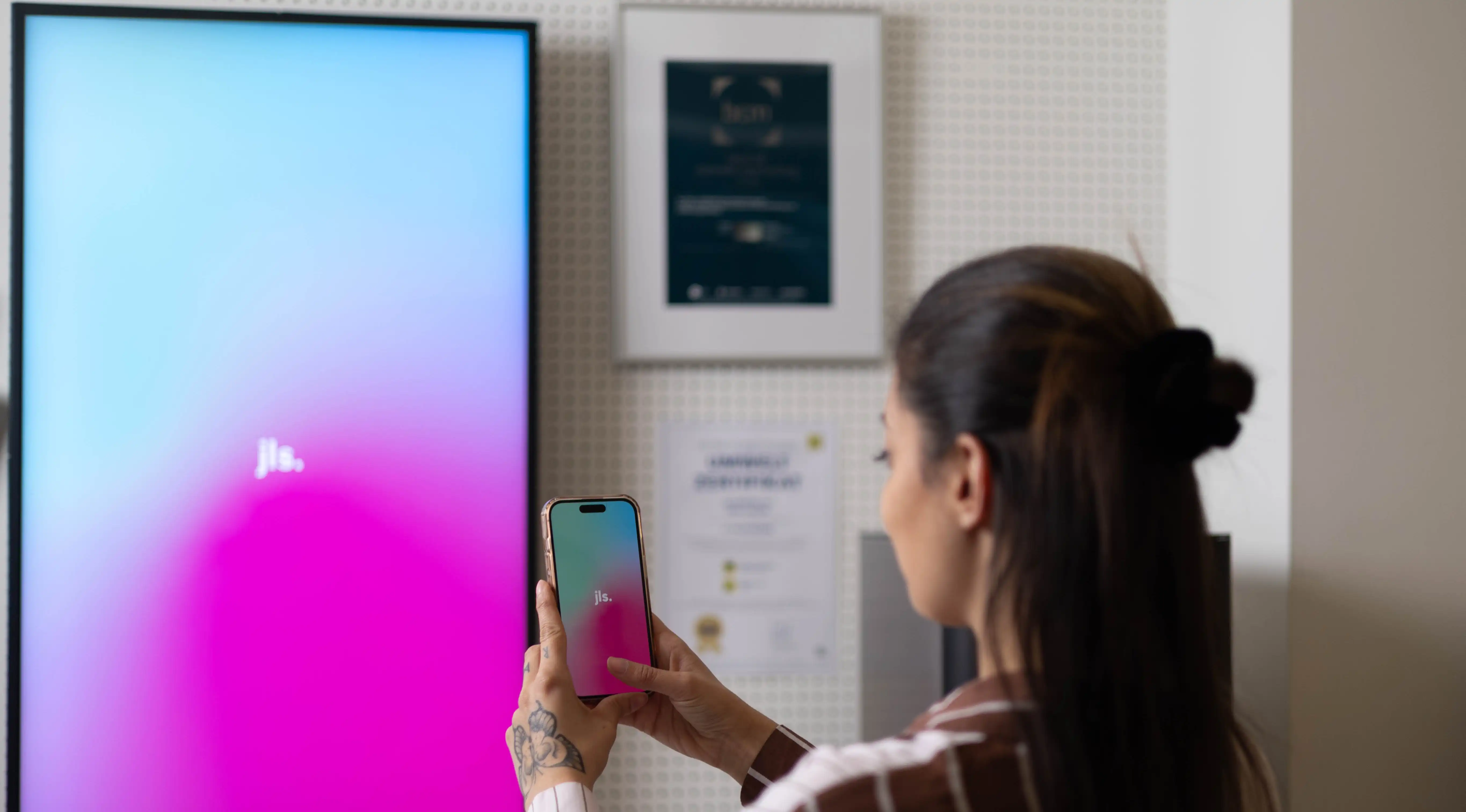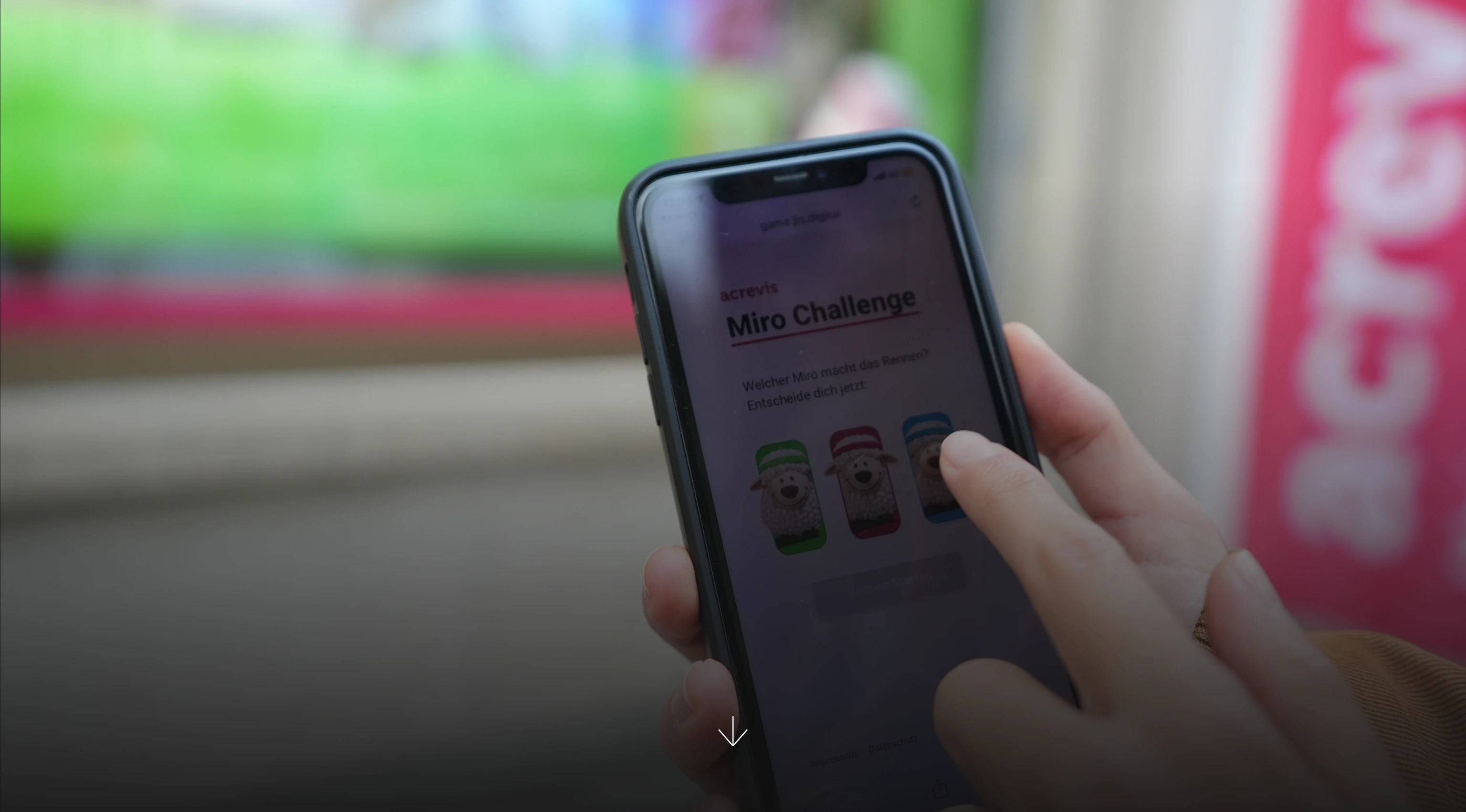
How it works.

Activate (potential) customers

Generate leads and experiences

Measure and optimize results
Benefits

Strengthen brand loyalty

Delight customers

Stay ahead

Measure results

Generate leads
Locally rooted
Find the right package:
🥈 Basic
A great fit if you want to create attention easily and collect leads quickly. You get proven point-of-sale game mechanics like a slot machine or prize wheel, including CI/CD customization (logo, icons, colors) and customer data capture for lead setup.
🥇 Premium
Ideal if you want to stage a complete brand world and build long-term customer loyalty. You get tailored gamification solutions with flexible CI/CD implementation aligned to your brand and goals, including an optional cross-channel campaign and data capture for leads and loyalty.
Want to know how much the packages cost?
Get in touch with Daniela:

Benefits
Understand and plan
Design and deliver
Measure and optimize
The Effect of Gamification Explained Through Data.
Gamification is effective because it demonstrably taps into well-established psychological and behavioral economic mechanisms. Studies show that variable reward systems, progress indicators, and time-limited challenges significantly increase engagement by fostering motivation, repetition, and attention. Mechanisms such as loss aversion, short-term rewards, and social comparison effects are particularly effective, as they encourage users to interact regularly.
In a quantitative study involving 204 participants, over 60% of respondents stated that they consciously purchased more in order to achieve playful rewards or discounts. At the same time, more than 55% use digital customer loyalty programs on a weekly basis, indicating a strong integration of gamified systems into everyday life. Point-based systems (94.6%) and instant rewards (59.3%) are among the most effective and best-known gamification elements.
These figures clearly show that gamification not only influences perception and brand loyalty but also directly impacts purchasing and usage behavior—measurable, scalable, and strategically applicable.
Source: Engel, M. (2025). The Influence of Gamification on Customer Loyalty, Master’s thesis, HSLU
Haven’t played yet? Try it out above and grab your prize.
FAQs
What is POS gamification and how does it differ from classic advertising?
Gamification turns brand messages into real experiences. POS gamification refers to using game-like elements directly at the point of sale or point of experience to actively involve customers. Unlike classic POS advertising, which is mainly perceived passively, gamification focuses on interaction, participation and experience. Brand messages are not only seen but experienced, exactly where purchase decisions are made.
Which use cases is POS gamification best suited for?
POS gamification is especially well suited for retail and banking but also for brand spaces in general, trade fairs, events, pop-up stores and promotions. Anywhere brands meet customers in a physical setting, gamification can capture attention and create experiences. It is particularly effective for product launches, sales promotions and brand activations where fast interaction and high visibility are key
Which gamification formats work especially well at the POS?
At the POS, short, intuitive and low-friction games work best. Examples include instant games and prize draws such as a slot machine, prize wheel or dropper games (catch games). Also effective are challenges with instant rewards such as discounts or giveaways and quiz formats for playful product education or knowledge transfer. POS gamification should work without explanation and integrate seamlessly into the shopping flow.
Want to see examples? Check out our references here.
What specific goals can gamification achieve in marketing?
These goals can be measured and optimized for both awareness and performance marketing campaigns. Typical outcomes include increased engagement such as longer dwell time and more interactions, qualified lead generation via forms or opt-in options, higher conversion rates for campaigns or promotions and stronger brand loyalty with repeat purchases.
How much effort does it take to implement POS gamification?
The effort required for POS gamification is usually lower than many expect. Thanks to modular concepts and proven mechanics, campaigns can be planned, rolled out and operated efficiently. What matters most is a clear goal definition and early alignment with the technical and spatial conditions on site. This creates effective activation without unnecessary complexity or long lead times.
This might also interest you
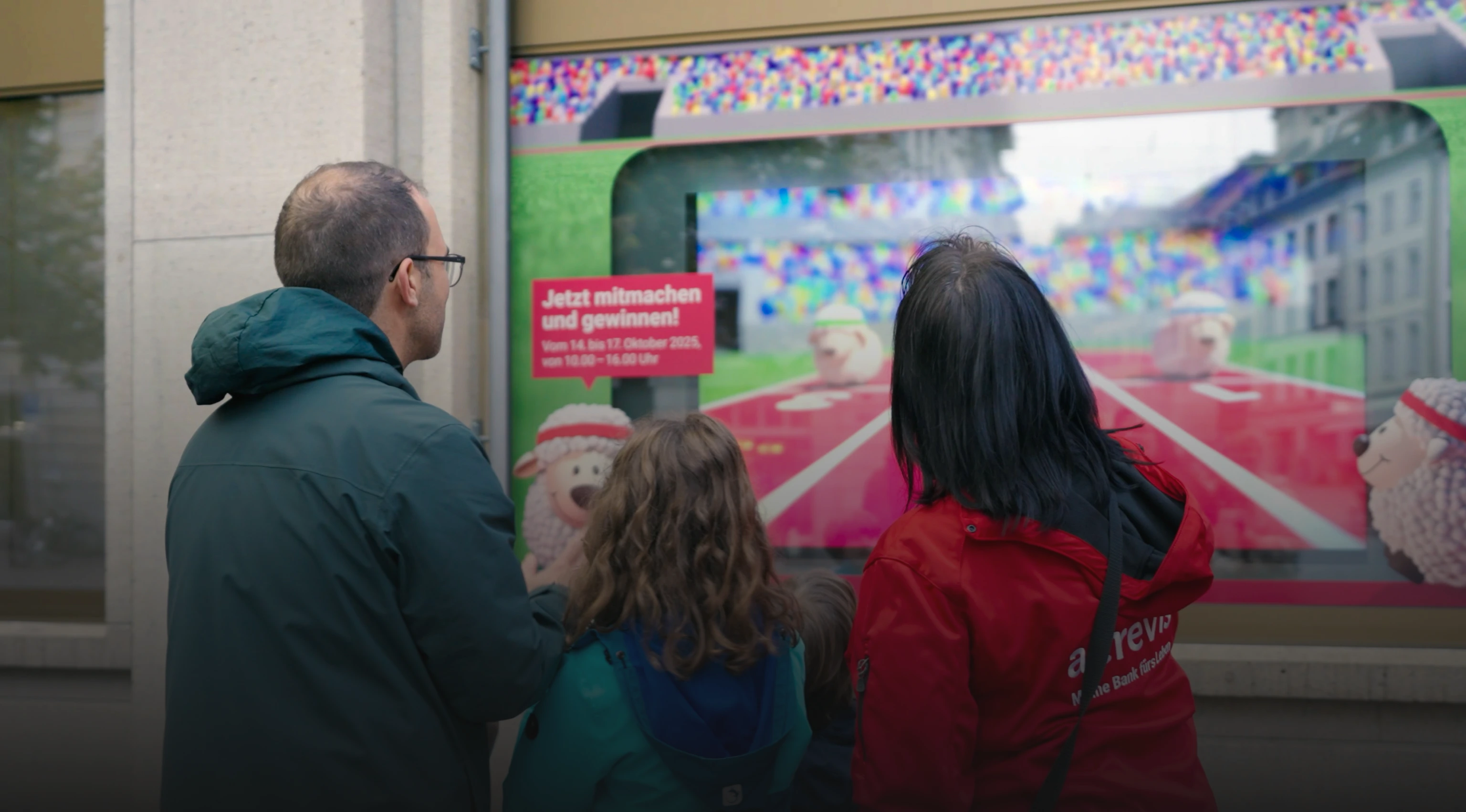
Gamification at POS: a practical example
Game Thinking: How playful thinking strengthens your marketing