28.04.2026
Author: Peter Forster
Why glasses-free 3D is becoming relevant now and what is behind it.
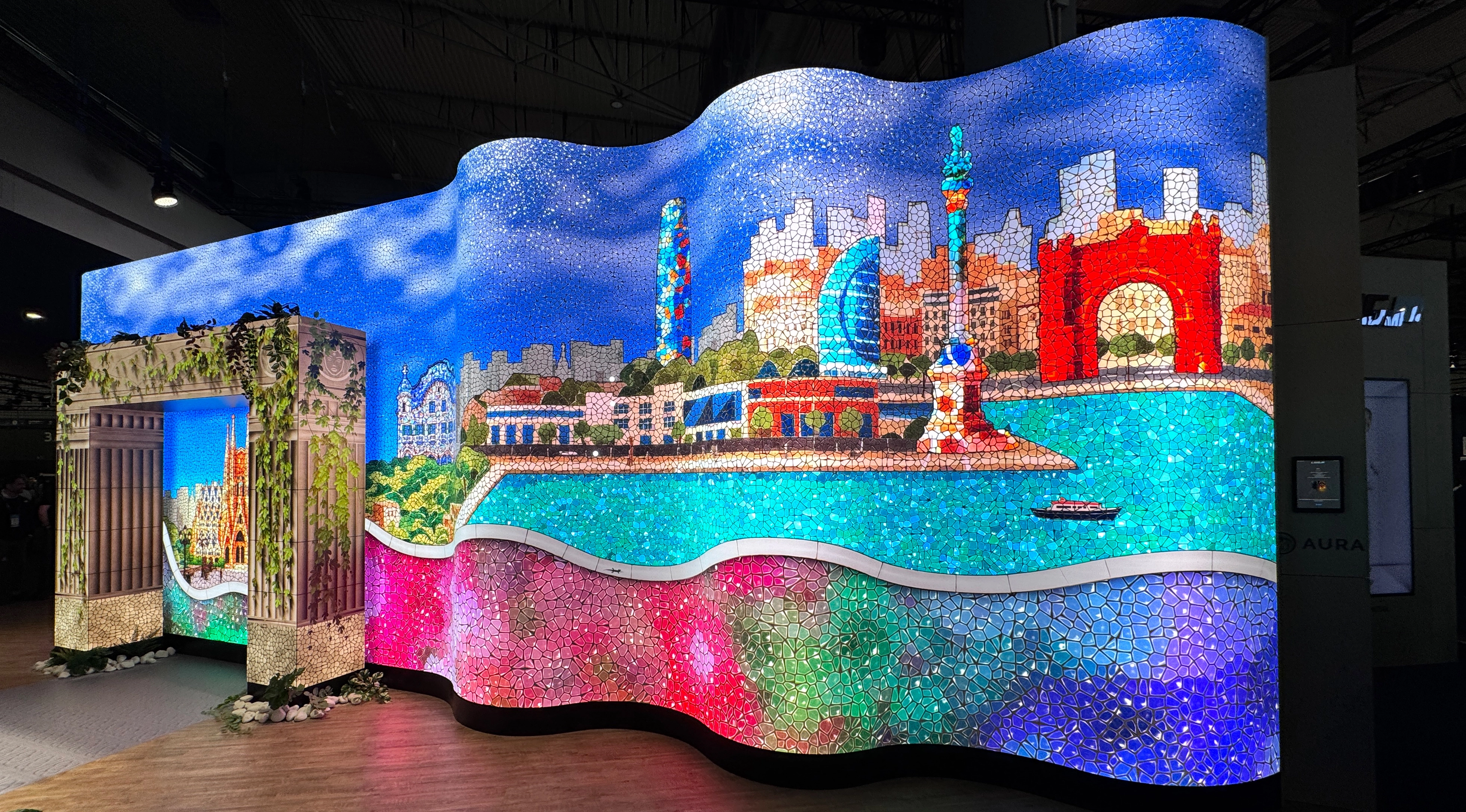
Digital signage has faced the same challenge for years: screens are getting larger, brighter and higher-resolution, but genuine visual differentiation is becoming increasingly difficult. This is exactly where a technology that was long considered niche is coming back into focus: three-dimensional displays. With so-called spatial displays, the topic is currently gaining new attention, not in consumer gaming, but in professional digital signage environments. The Samsung Spatial Display is a prominent current example. Beyond the product itself, however, it is worth taking a fundamental look at the question:
What are spatial displays and why are they exciting right now?
What are spatial displays?
More than 2D, but not a hologram
Spatial displays are displays that create visual depth without special glasses or headsets. Unlike classic 2D displays, the displayed content appears to sit spatially in front of or behind the display surface.
The distinction is important:
- No VR or AR: viewers do not need to wear any hardware
- No holographic boxes: no deep or enclosed housings are required
- No classic 3D TV: the display is optimised for open spaces
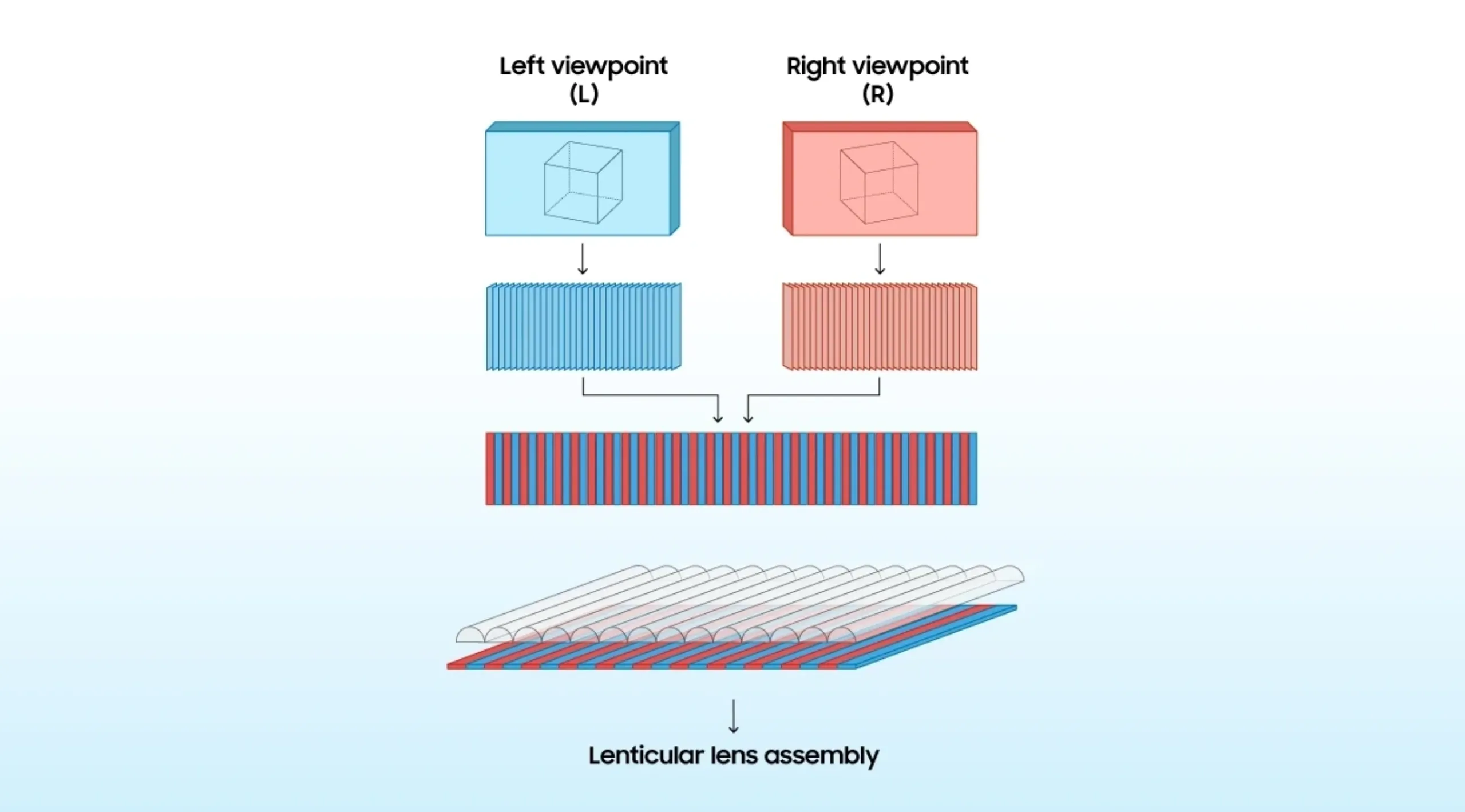
The spatial impression is created through optical and visual principles based on human vision, especially the minimal difference between what the left and right eye perceive (principe of binocular disparity).
Why the topic is gaining attention right now
Spatial displays are not a new concept. What is new is their technical maturity:
- significantly slimmer designs
- better image sharpness despite the 3D effect
- less dependence on complex special content
At the same time, the digital signage market is seeing growing demand for new visual experiences that clearly stand out from their surroundings.
Glasses-free 3D: how does it work?
Glasses-free 3D: how does it work?
According to Samsung, the Spatial Display works with an optical layer inside the display called a 3D Plate. This ensures that different image information is directed specifically to each eye. Unlike some other 3D displays, the Samsung Spatial Display deliberately does not use eye tracking.
This enables:
- multi-person viewing
- stable effect even with movement
- use in open environments
At its core, the system combines:
- a high-resolution 2D display for the main subject
- an optical structure (comparable to a lenticular principle)
- specially calculated image content with depth information
The key difference compared to earlier 3D approaches: the foreground remains razor-sharp in 2D, while the depth effect is mainly created in the background. This preserves readability, brightness and detail, a central factor for digital signage applications. In addition, the design and installation remain comparable to classic signage displays despite the 3D technology, which is a major difference compared to large-scale hologram installations.

Where can spatial displays create real added value?
In retail environments, spatial displays can create added value where:
- products require explanation
- emotion and staging are more important than pure information
- a premium effect is desired
When used purposefully, rotating products, layer effects or floating highlights can significantly increase visual attraction.
At trade fairs or events, spatial displays can play to their strengths particularly well:
- high attention in noisy environments
- strong long-distance impact
- differentiation from classic LED or LCD screens
At trade fairs in particular, a spatial display can become a visual anchor point.
Not every use case benefits from 3D. Text-heavy information displays, classic menu or wayfinding screens and applications with very short viewing times are not suitable for 3D.
Content as a success factor.
Why the display alone is not enough
Even a spatial display does not create impact automatically. Without well-planned content , the 3D effect either remains invisible or feels like a pure technology demo. The spatial impression only emerges when the content is designed in a way that makes the viewer’s brain interpret a flat image as “real” 3D. Simulated physical conditions such as light, shadow, depth of field and materiality are crucial.
Spatial content does not follow classic 2D rules. Successful implementations think in space instead of surface: with clear layers, deliberate focus and radical reduction.
- Place content intentionally across foreground, middle ground and background.
- Create a clear image composition with a strong hero object.
- Use animations deliberately: depth only emerges through movement.
Existing 2D material can serve as a basis, but the impact only comes from targeted preparation for spatial perception. This is how the wow effect is created.
How to avoid typical content mistakes:
- Space instead of screen: think of content spatially, do not simply adapt it from 2D.
- Reduction instead of overload: fewer elements, less text and a clear visual focus.
- Consider reality: take location, viewing angle and technical limitations into account.
AI-supported tools can help automatically generate depth information, isolate objects or optimise shading and spatial impact. This lowers the entry barrier for spatial content.
In short: spatial displays are not an explanatory medium, but an attention magnet. Less is more.
Conclusion and classification.
Spatial displays are not a replacement for classic digital signage, but an addition. Their value lies where attention is scarce, where brands want to communicate experience instead of information or where visual differentiation is decisive.
But the spatial display is “only” the technology. The effective impact is created through the concept, the content and its integration into an overall experience.
Who is this topic relevant for?
- brands with strong visual ambitions
- retail and experience formats
- trade fair and event communication
Interested in an exchange on the topic of «spatial display»?
Contact Peter:

The product images and technical information used in this article come from Samsung Newsroom Switzerland, Samsung Global Newsroom and Samsung Business Switzerland. The editorial classification is by jls.
FAQs
What is a spatial display?
A spatial display is a display that creates spatial depth without 3D glasses. Content no longer appears purely flat, but seems to sit in front of or behind the display surface. A spatial display is not a VR or AR system and it is not a hologram.
How does a spatial display work without 3D glasses?
Spatial displays use optical principles based on human depth perception. More specifically, they rely on binocular disparity, the minimal difference between what the left and right eye perceive
What applications are spatial displays suitable for?
Spatial displays are not a replacement for classic digital signage, but a targeted addition. They are most effective where attention comes before information.
Does it require special content?
Yes. The biggest mistake is to assume that a spatial display automatically makes existing content better. Existing 2D material can serve as a basis, but the effect only emerges through targeted preparation.
Learn more about digital signage solutions.
Swisscom Reference
Blog Post: «Transparent LED»